Product overview
The Medusa MS-system
The MS series is Medusa Radiometrics’ family of field-ready gamma-ray sensors, built around the embedded Medusa Detector Operating System (mDOS application) and robust hardware. Designed for demanding environments, each unit operates fully autonomously and requires only a power supply to start measuring.
Consistent user experience
All MS models use the same interface and workflow for mapping operations. The main difference between models is detector size: larger detectors contain more crystal volume, which increases sensitivity and allows faster data collection. From the compact MS-100 to the high-performance MS-20K, operation is consistent across the entire series.
Intelligent hardware and embedded software
Onboard processing performs calibrations, corrections, analysis and quality checks in real time, while also storing all raw data for later analysis. The MS series is self-calibrating, supporting stable and repeatable performance during long surveys and varying field conditions.
Real-time monitoring
A built-in WiFi access point allows data to be viewed instantly on any browser-enabled device. The mDOS interface displays spectra, maps, and system status in real-time on tablets, laptops, or smartphones, both in the field and during setup.
Maximum efficiency sensors
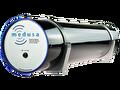
The MS-4000 airborne gamma-ray sensor. A detector used by geophysical survey companies, geotechnical consultants, and research institutes to capture soil variation in large areas.
| Use | |
|---|---|
| Typical usage | Air-borne |
| Mapping speeds | Up to 90 km/h |
| Applications | Mineral and soil mapping |
| Specs | |
|---|---|
| Scintillation crystal | 4000 ml CsI |
| Weight | 29 Kg |
| Sensors | Spectrometer, GPS, PTH |
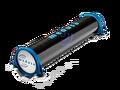
The MS-2000 detector is optimized for efficient soil and sediment mapping while mounted on an off-road vehicle. Robust, efficient, and reliable in harsh conditions.
| Use | |
|---|---|
| Typical usage | Vehicle-borne |
| Mapping speeds | Up to 45 km/h |
| Applications | Mineral and soil mapping |
| Specs | |
|---|---|
| Scintillation crystal | 2000 ml CsI |
| Weight | 12 kg |
| Sensors | Spectrometer, GPS, PTH |
Weight optimized sensors
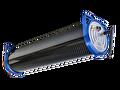
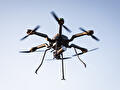
The Medusa Radiometrics MS-1000 detector is an autonomous and robust system suitable for drone-borne surveys for mineral prospecting, contamination mapping, and efficient monitoring applications.
| Use | |
|---|---|
| Typical usage | Drone-borne |
| Mapping speeds | Up to 30 km/h |
| Applications | Mining & environmental |
| Specs | |
|---|---|
| Scintillation crystal | 1000 ml Csl |
| Weight | 6.7 kg |
| Sensors | Spectrometer, GPS, PTH |
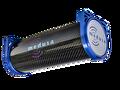
The MS-700 is, like its big brother, the MS-1000, optimized for drone use. Its payload under 5 kg makes it well-suited for off-the-shelf drones while maximizing its efficiency per unit of weight.
| Use | |
|---|---|
| Typical usage | Handheld, drone-borne |
| Mapping speeds | Up to 20 km/h |
| Applications | Mineral and soil mapping |
| Specs | |
|---|---|
| Scintillation crystal | 700 ml Csl |
| Weight | 4.7 kg |
| Sensors | Spectrometer, GPS, PTH |
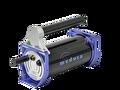
The MS-350 is designed for hand-held surveys. However, it is also successfully used as an ultralight drone-borne system. With its weight below 3 kg, it is well-suited for smaller drones.
| Use | |
|---|---|
| Typical usage | Handheld, drone-borne |
| Mapping speeds | Up to 15 km/h |
| Applications | Mineral and soil mapping |
| Specs | |
|---|---|
| Scintillation crystal | 350 ml Csl |
| Weight | 2.7 kg |
| Sensors | Spectrometer, GPS, PTH |
Stationary sensors
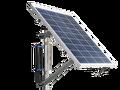
The gSMS is designed for stationary, long-term outdoor measurements. The data is uploaded to the cloud to give insight into the readings, used for monitoring of radionuclides and soil moisture.
| Use | |
|---|---|
| Typical usage | Stationary |
| Mapping speeds | Stationary |
| Applications | Monitoring, soil moisture determination |
| Specs | |
|---|---|
| Scintillation crystal | 100 ml Csl |
| Weight | 1.5 kg |
| Sensors | Spectrometer, GPS, PTH, rain monitor |
Accessories
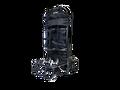
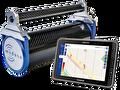
mDOS & Gamman
mDOS
Whether doing an airborne survey, locating a lost source with a UAV, or using our detector for a handheld survey for mapping the environment, you can count on using the same familiar interface. mDOS is developed for in-the-field usage. Optimized for real-time monitoring, ease of use and automating your survey workflow.
GammAn
GammAn is our comprehensive post-processing software tailored specifically for analyzing measurement results obtained from our gamma-ray detection systems.
Both mDOS and Gamman have been developed with a focus on user-friendliness, ensuring that users of all skill levels can effortlessly navigate and leverage the full potential of our detection systems. Whether you are a seasoned expert or new to gamma-ray analysis, our software packages provide the tools you need for accurate measurements and meaningful data interpretation.
The soil is ticking
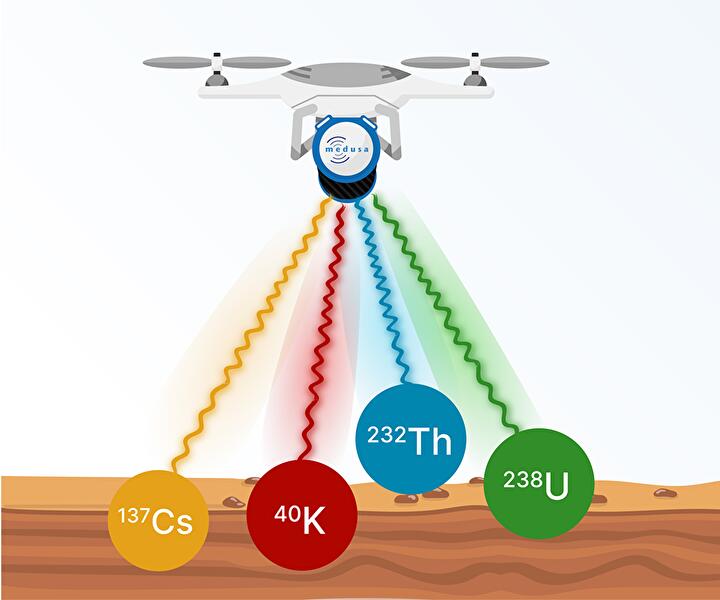
Every soil contains soil radionuclides like potassium (K-40), uranium (U-238), thorium (Th-232), and sometimes cesium (Cs-137). The Medusa sensor can measure the signals emitted by these radionuclides. With our sensor, even the smallest variations in radionuclide concentrations within the soil can be detected, offering valuable insights into the soil's composition.
The fingerprint of the soil
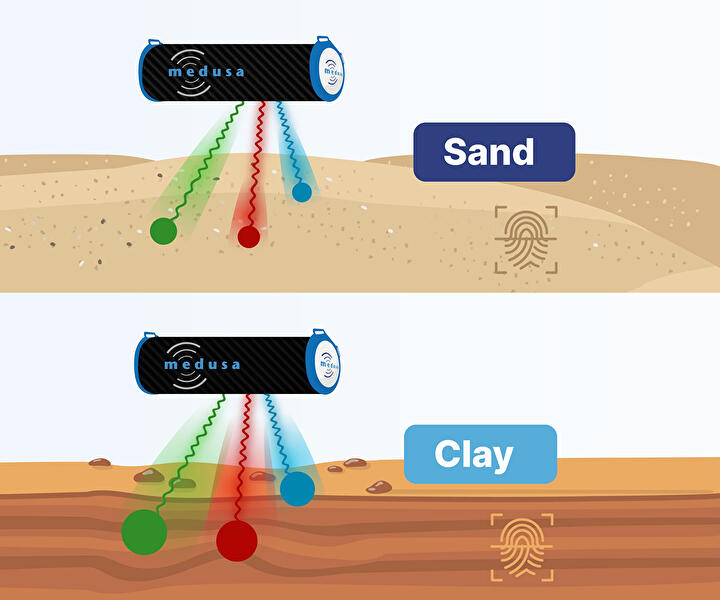
Our sensors provide accurate insights into soil composition and a wide range of other soil parameters. In fact, the radionuclide signal is so distinctive that it is often referred to as the soil's fingerprint. Our sensors are used to measure soil composition and diverse soil properties including soil texture, minerals, and soil pollutants like heavy metals.
Size matters
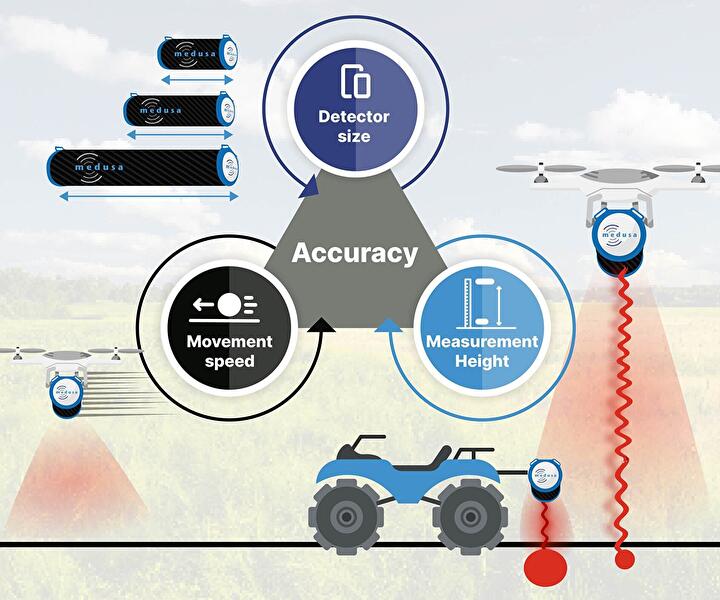
Medusa has developed a variety of sensors designed for specific applications. Although all sensors share the same technology, operating system, robust electronics, and easy-to-use interface, the difference lies in their measurement efficiency. Larger sensors offer enhanced efficiency, enabling faster survey speeds and larger survey heights.
Finding the right sensor for the job is an intricate interplay between the accuracy needed on one hand and parameters such as the working speed, measurement height, and available payload on the other hand. For instance, when using drones, the available payload will restrict the maximum detector weight.
In-depth information
For more information about the application of our sensors, visit the Medusa institute.
Visit the Medusa institute
For all the technical information and manual, please refer to our documentation.